Source Camping Wagon for Tools, Shopping, and Storage
Find 30 camping wagon options for tools, shopping, and storage. Compare features like 600D Oxford fabric, solid wheels, and folding designs from Qingdao suppliers. These versatile carts offer high weight capacity and durable construction for various outdoor needs; compare the available evidence and request quotations based on your requirements.
Key considerations
Products List


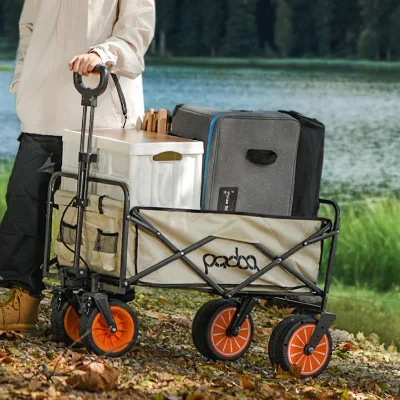
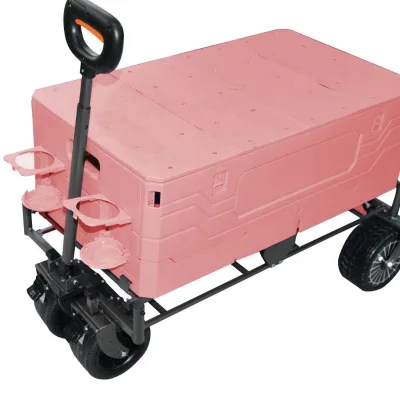


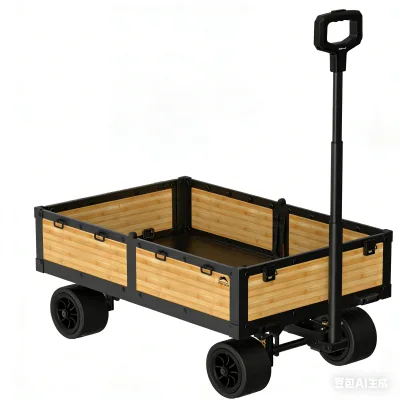
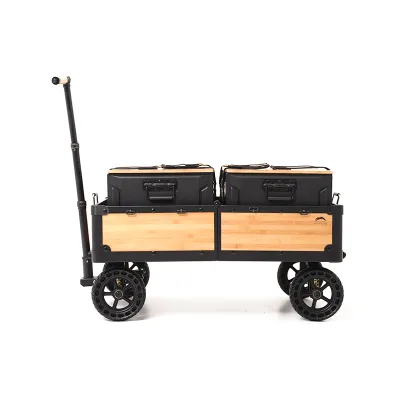


Comprehensive Sourcing Guide
Camping Wagon Sourcing Guide
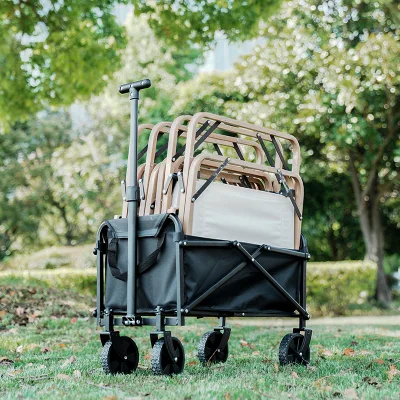
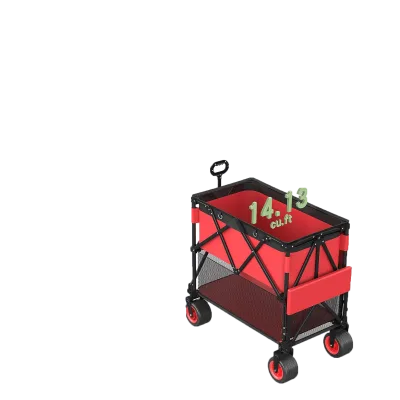
Buyers must first distinguish between utility-focused models designed for heavy tool transport and those optimized for leisure activities like beach trips or picnics. The observed market data indicates a clear split in product attributes, with some units featuring removable bags and storage pockets for general shopping, while others emphasize a steel cart bed and dumping mechanisms for industrial or construction site use. Understanding this functional divergence is critical before engaging with suppliers, as the intended application dictates the necessary frame strength and wheel configuration.
Procurement teams should also evaluate the specific customization options available, as the supply chain offers significant flexibility in handle types and folding mechanisms. While some listings highlight telescoping and adjustable handles for user comfort, others provide fixed handles suitable for compact storage scenarios. The presence of OEM capabilities suggests that buyers can request specific branding or minor structural modifications, but this requires early alignment on design constraints to ensure the final product meets the intended operational requirements without compromising structural integrity.
Product Scope and Observed Listing Signals
The observed product range reveals a diverse spectrum of specifications, particularly regarding weight capacity and terrain compatibility. Listings indicate a weight capacity range of 80 to 120kg, which serves as a primary filter for buyers needing to transport heavy loads versus light recreational gear. Furthermore, the availability of all-terrain compatibility alongside solid wheels suggests these units are engineered for uneven surfaces, a crucial signal for buyers operating in outdoor environments where standard caster wheels might fail or sink into soft ground.
Buyers should closely examine the listed dimensions and packaging data to assess logistics feasibility, as carton sizes vary significantly between models. Some units are packed in compact dimensions of 611823cm, while others require larger containers measuring up to 10363103 cm. This variance directly impacts shipping costs and warehouse storage requirements. Additionally, the net weight ranges from approximately 5.2kg to 14.8kg, influencing the ease of manual handling and the overall portability of the wagon once it is deployed at the destination.
Technical Specifications to Verify
Verification of the frame material is essential, as the majority of observed listings specify carbon steel or steel cart beds to ensure durability under load. Buyers must confirm that the powder coating process is applied uniformly to prevent rust, especially for units intended for outdoor use in wet or sandy conditions. The surface handling specification is a key indicator of longevity, and failing to verify the quality of this coating can lead to premature corrosion and structural failure in harsh environments.
Wheel configuration and size require rigorous scrutiny to match the specific terrain of the intended use case. While some models feature 16-inch wheels for superior obstacle clearance, others utilize smaller 9"*4" wheels which may be better suited for smooth pavement or indoor storage. The distinction between telescoping, adjustable, and fixed handles also demands attention, as these features directly affect user ergonomics and the folded footprint of the wagon. Ensuring the wheel count matches the stability requirements of the load is a non-negotiable step in the technical validation process.
Compliance and Safety Documentation
Safety certifications serve as a primary indicator of a supplier's adherence to international manufacturing standards, with CE and GS appearing frequently in the observed data. Buyers should request valid test reports to confirm that the product meets these specific safety requirements, particularly regarding structural stability and load-bearing limits. The presence of additional certifications like TUV and RoHS in some listings suggests a higher tier of compliance, which is often required for entry into regulated markets in Europe and North America.
Documentation regarding the warranty and after-sales service is equally critical for mitigating long-term procurement risks. Most observed listings offer a one-year warranty and provide repair or replacement services for accessories, which indicates a baseline level of supplier confidence. However, buyers must verify the specific terms of these warranties, including what constitutes a defect versus normal wear and tear. Clear documentation on the replacement process for broken wheels or torn fabric ensures that operational downtime is minimized if a product failure occurs after delivery.
Cost Drivers and Commercial Terms
The minimum order quantity (MOQ) is a significant commercial variable, with observed ranges spanning from single units to 500 pieces. This variance allows flexibility for small retailers but may require larger commitments for bulk buyers seeking the lowest unit price. Buyers must calculate the total landed cost by factoring in the MOQ requirements alongside the observed price range of 9.13 to 5670 USD, which reflects the vast difference between basic utility models and premium, feature-rich wagons.
Lead times and delivery schedules are another major cost driver that can impact inventory planning and cash flow. The observed delivery time of 35 days for certain models highlights the need for early ordering to avoid stockouts during peak seasons. Buyers should negotiate clear terms regarding production delays and shipping schedules, as the origin location of Qingdao may introduce specific logistical variables. Understanding the relationship between order volume, customization complexity, and the resulting lead time is essential for accurate budgeting and supply chain management.
Supplier Qualification and Quality Control
Supplier qualification should begin with a review of their production capabilities and their ability to meet specific customization requests. The availability of OEM services suggests that suppliers can adapt their manufacturing lines to accommodate unique branding or design changes, but this requires a robust quality control protocol to ensure consistency across batches. Buyers must verify that the supplier has the capacity to maintain the specified material standards, such as 600D Oxford cloth and carbon steel frames, throughout the entire production run.
Quality control checks must extend beyond the final inspection to include raw material verification and process audits. Given the reliance on powder coating and steel fabrication, buyers should request evidence of surface treatment quality and weld integrity. The presence of specific model numbers like OTIA-CW-004S-1 and FW004B-01 indicates a structured production system, but buyers should still implement pre-shipment inspections to confirm that the delivered units match the agreed-upon specifications for weight, dimensions, and functional features like the dumping mechanism.
Long-Term Procurement Checks
Establishing a long-term relationship requires ongoing monitoring of product performance and supplier responsiveness to market changes. Buyers should track the durability of the 600D Oxford cloth and the resilience of the solid wheels over time to identify any recurring quality issues that may not be apparent during initial sampling. Regular feedback loops with the supplier can help refine product designs and address any wear-and-tear concerns that arise from actual field usage in various environments.
Procurement strategies must also account for the evolution of safety standards and environmental regulations that could affect future orders. As certifications like RoHS and CE are updated, suppliers must demonstrate their ability to adapt their manufacturing processes to remain compliant. Buyers should maintain a dynamic supplier database that tracks lead times, quality metrics, and certification status to ensure that the supply chain remains resilient and capable of meeting evolving regulatory and operational demands without interruption.
FAQs
What materials are used for camping wagon frames and fabrics?
The frames are constructed from carbon steel with powder coating for durability. The fabric is made of 600D Oxford cloth, providing strength for outdoor use. Some models feature a steel cart bed. These materials ensure the wagon withstands heavy loads and rough terrain while remaining resistant to corrosion and wear during frequent transport.
Can the camping wagon be customized for specific branding needs?
Yes, customization is available for buyers requiring specific branding or design adjustments. OEM services are supported to meet unique requirements. Buyers can request modifications to fit their market needs. This flexibility allows businesses to tailor the product effectively. Contact suppliers directly to discuss specific customization options and feasibility for your order.
What is the typical weight capacity for these camping wagons?
The weight capacity ranges from 80 to 120 kg depending on the model. This range supports various uses including tools, shopping, and outdoor storage. The sturdy carbon steel frame and solid wheels contribute to this load-bearing capability. Ensure your items fall within this limit to maintain safety and structural integrity during transport on all terrains.
Which certifications do the camping wagons hold for safety?
The wagons hold CE, GS, TUV, and RoHS certifications. These standards ensure compliance with international safety and environmental regulations. Some models specifically list CE and GS. These certifications provide assurance of quality and safety for buyers in regulated markets. Verify specific certification documents with suppliers before finalizing procurement decisions for your inventory.
How are the camping wagons packaged for shipping?
Wagons are packed as one set per carton. Carton sizes vary by model, such as 61x18x23cm or 34x27x76cm. This packaging protects the product during transit. The compact folding design facilitates efficient storage and shipping. Buyers should check specific carton dimensions to calculate freight costs accurately and plan warehouse storage space effectively for large orders.
What is the lead time for manufacturing camping wagons?
The delivery time is typically 35 days for production. This lead time applies to standard manufacturing processes. Buyers should account for this duration when planning inventory replenishment. Factors like customization or order volume may influence the exact schedule. Confirm the current lead time with suppliers to ensure timely delivery for your specific procurement needs and market demands.
Are the wheels solid or pneumatic for better terrain handling?
The wagons feature solid wheels, which are durable and require no maintenance. Some models specify 16-inch or 9x4-inch solid wheels. These wheels provide reliable performance on all terrains without the risk of punctures. The solid construction ensures longevity and consistent rolling resistance. This design is ideal for rough outdoor environments where pneumatic tires might fail.